
The Course

Four years. Five paid residencies. An integrated MSc.

ISE is a computer science degree where you learn by doing. You graduate with an integrated BSc and MSc, with the option to exit after three years with a BSc (Hons).

Course details

You learn software engineering by doing it

ISE is a computer science degree where you learn by doing, and you graduate with an integrated bachelor's and master's qualification. You spend half your time learning on campus under continuous assessment, and the other half getting paid to solve real problems on residencies in leading companies.

Over your four years you complete five paid residencies, spending more than 40 weeks each year learning in a personalised, highly interactive environment, working in small groups with your peers and mentors.

Award codes: LM173 BSc and LK315 MSc in Immersive Software Engineering.

The shape of the degree

Four years, five paid residencies

Year 1BSc, LM173Sem 1On campuscontinuously assessedSem 2On campuscontinuously assessedSem 3Residency 1paid residencyYear 2BSc, LM173Sem 1Residency 2paid residencySem 2On campuscontinuously assessedSem 3Residency 3paid residencyYear 3BSc, LM173Sem 1On campuscontinuously assessedSem 2Residency 4paid residencyYear 4MSc, LK315Sem 1On campuscontinuously assessedSem 2Residency 5paid residency

Roughly half the degree is spent on paid residency. Exit with a BSc (Hons) after Year 3, or continue to the integrated MSc in Year 4.

Browse the residency board →

What you will study

Blocks, year by year

Year 1

BSc, LM173

Semester 1

  • CS4421 Problem Solving with Computers
  • CS4431 Effectively Building Software with Others

Semester 2

  • CS4422 Data Centric Computing
  • CS4431 Computation and Architecture Part 1

Semester 3

  • CS4443 Computation and Architecture Part 2
  • CS4453 Residency 1: Software Systems / Dev Part 1

Year 2

BSc, LM173

Semester 1

  • CS4444 Residency 2: Software Systems / Dev Part 2

Semester 2

  • CS4445 Human Centric Computing
  • CS4455 Ethical Hacking and Security Part 1

Semester 3

  • CS4436 Ethical Hacking and Security Part 2
  • CS4446 Residency 3: User Interaction in Practice

Year 3

BSc, LM173

Semester 1

  • CS4437 Scaling for Reliability and Performance
  • CS4447 Computational Thinking

Semester 2

  • CS4448 Residency 4: Immersive Software Project

Year 4

MSc, LK315

From Year 3, Semester 3

  • CS6513 Research Methods

Semester 1

  • CS6514 Artificial Intelligence and Machine Learning
  • CS6524 Software meets World

Semester 2

  • CS6515 Residency 5a: ISE Research Project Part 1
  • CS6525 Residency 5b: ISE Research Project Part 2

What you need to know

Entry and key facts

Award

LM173 BSc and LK315 MSc in Immersive Software Engineering.

Duration

Four years, an integrated BSc/MSc at level 9 on the NFQ, with an exit opportunity after Year 3 with a BSc (Hons) at level 8.

Subject area

Engineering and Science.

CAO points

Entry in 2025 required 651 points. Points combine the Leaving Certificate (up to 625) with the Entrance Submission (up to 200).

Leaving Certificate

A Leaving Certificate, or an approved equivalent, with at least two H5 grades and four O6 grades, or four H7 grades.

Subjects

A minimum grade H4 in Mathematics, plus Irish or another language, and English. Contact UL admissions for full details.

Course fees

ISE fees are the same as for any other BSc in the UL Faculty of Science and Engineering.

Applying

Entrance submission and routes in

Entrance submission

Applicants submit either Route A or Route B. You may also be invited to an interview to discuss your submission.

Special Mathematics Examination

A Special Mathematics Examination is offered at UL after the Leaving Certificate results if you did not meet the Mathematics requirement.

Mature students

Applications from mature students are welcome, through the CAO. See UL's Mature Student Guide and the Mature Student Office.

International applicants

Details for international applicants are available through the University of Limerick International Students pages.

Inside ISE

Where the learning happens

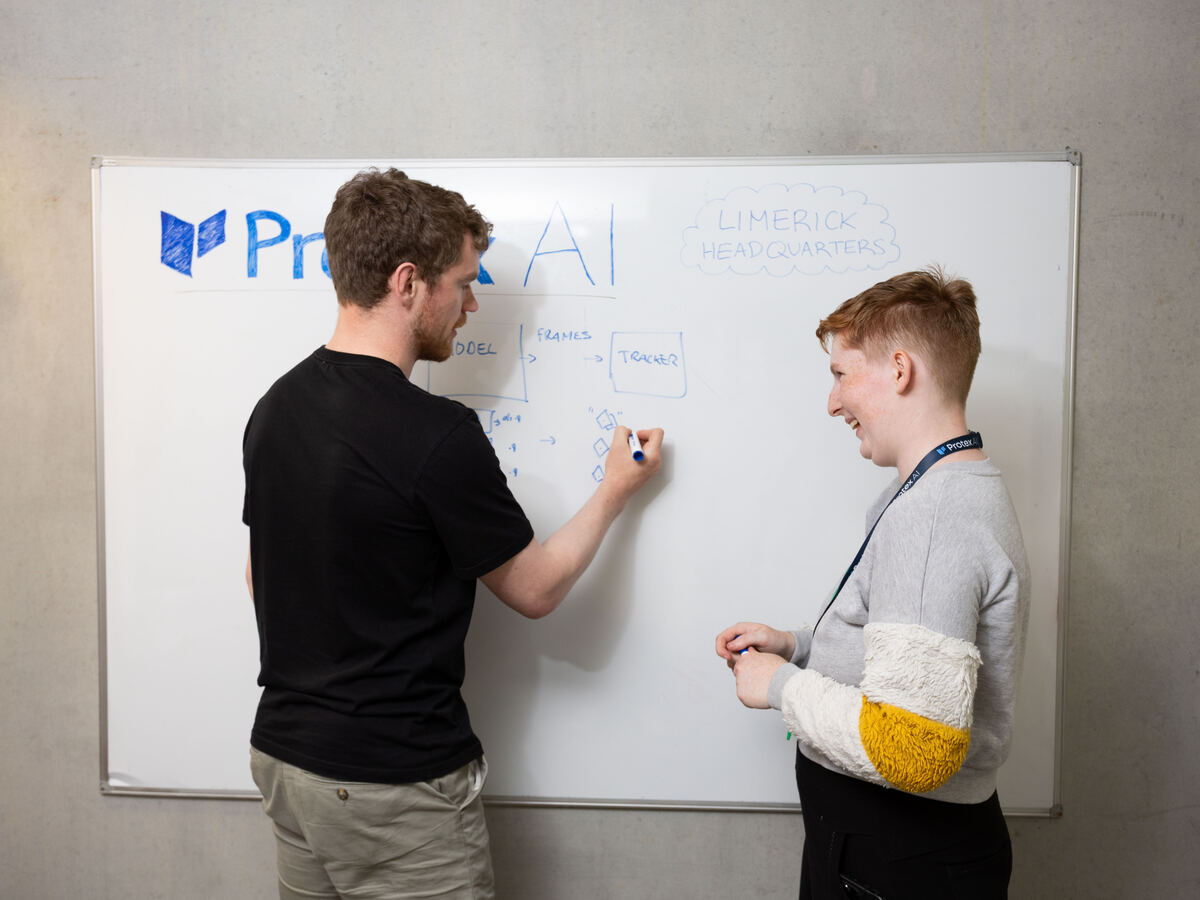
Studios, whiteboards and real projects, students work through problems together, closer to an engineering floor than a classroom.

How you're taught

Learning by doing

Studio-based

Small teams in a studio, closer to a real engineering floor than a classroom.

Project-driven

Every block is anchored in building something real.

Continuously assessed

Progress is measured through the work itself, not end-of-year exams alone.

50%
of the degree in industry
5
paid residencies
MSc
or BSc after 3 years

Apply for 2027

Add CAO code LM173 to your application.